How AI Is Changing the Future of SEO is becoming an important topic in digital marketing. Artificial Intelligence (AI) is transforming how people search for information and how businesses improve their online visibility.
AI-powered platforms such as Google AI Overviews, ChatGPT Search, and Perplexity are changing traditional search experiences by providing faster, smarter, and more personalized answers.
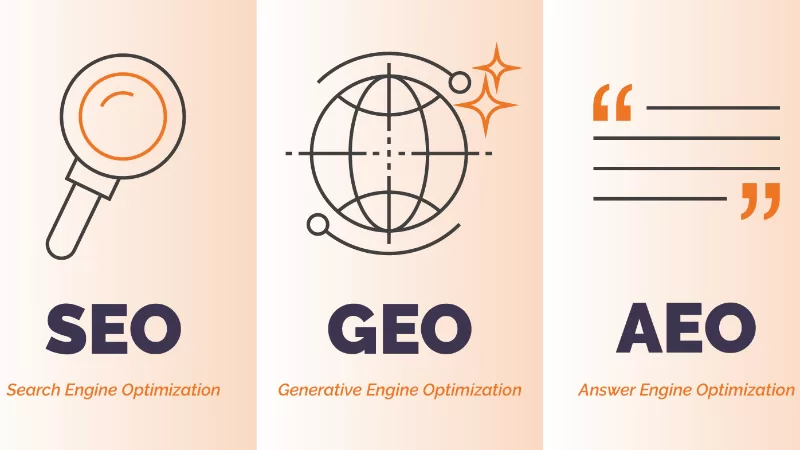
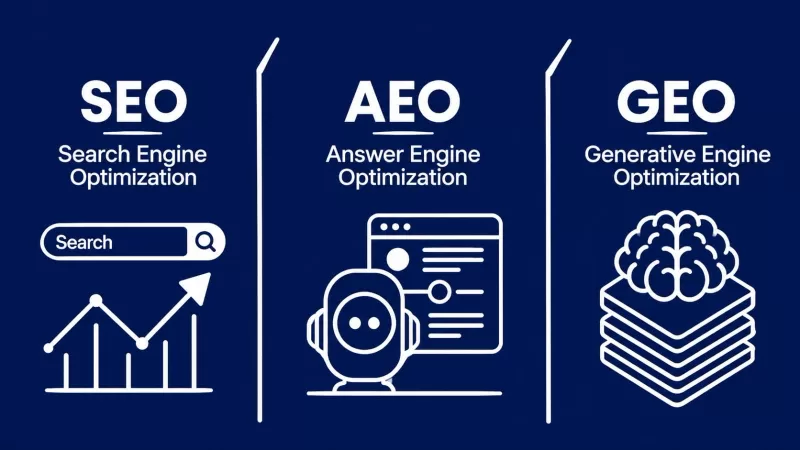
AI helps SEO professionals understand user intent, research keywords, optimize website content, and improve search visibility. Modern SEO also focuses on Answer Engine Optimization (AEO) and Generative Engine Optimization (GEO), helping websites become more useful and trustworthy sources for AI-powered search engines.
The future of SEO is not just about ranking higher on Google; it is about creating valuable content, building trust, and staying visible in the evolving world of AI-powered search.
What Is AI Search?
AI search is a way of finding information in which artificial intelligence helps interpret a question and prepare a direct response. Instead of showing only a list of pages, an AI-powered search experience can summarize information from several sources and provide links for further reading.

Imagine asking a knowledgeable librarian, “Which laptop is suitable for a university student who needs long battery life and has a limited budget?” A traditional search engine may show pages about laptops, reviews and online stores. An AI search tool may organize information into a short comparison and explain what to consider. The user can then ask a follow-up question without starting a completely new search.
AI search is not one single product. Google offers AI Overviews and AI Mode. Chat GPT can search the web and provide linked sources. Perplexity is designed around answer-led research, while Microsoft Copilot connects conversational assistance with Bing and Microsoft products. Their interfaces and source-selection methods differ, and their features can change over time.
How Does AI Search Work? Simple Steps
AI search systems combine language technology with information retrieval. A language model learns patterns in language and generates responses. When web search is available, the system can also retrieve current pages or other sources to help answer a question. The exact process varies by platform, so these steps are a simplified explanation rather than a technical description of every product.

1. The user asks a question. The wording may be conversational and include several requirements.
2. The system interprets the request. It identifies the topic, intent and important details.
3. The question may be divided into smaller searches. A request for a beginner-friendly course, for example, may involve course fees, duration, syllabus, practical projects, location and career support.
4. The system retrieves relevant information. It may examine web pages or other available sources that address the main question and its subtopics.
5. The system prepares a response. It combines information into an answer and may show links or citations to supporting sources.
This explains why a website can be relevant even when it does not target the exact wording of a user's question. A page that clearly explains course duration or project work may help answer one part of a broader question. The opportunity is to publish useful information that genuinely satisfies those sub-questions.
What Is the Future of SEO?
The future of SEO will include both traditional search visibility and visibility inside AI-assisted experiences. Websites will still need to be discoverable, technically accessible and useful. Businesses may also pay closer attention to whether their expertise, products or services are mentioned in AI-generated answers.

Three areas will remain important. First, content must be accurate, clear and useful. Second, a brand needs evidence of real experience and a consistent reputation. Third, a website should be easy for search systems and people to navigate. These are not shortcuts; they are foundations of a reliable online presence.
Two terms frequently appear in discussions about this shift. Answer Engine Optimization (AEO) focuses on making information easy to use in direct answers. Generative Engine Optimization (GEO) describes efforts to make content and brands useful, understandable and credible sources for generative AI responses. Both complement broader SEO rather than replacing it.
Google Search Central explains that its AI search experiences are built on existing Search systems and that established SEO best practices remain relevant. This is an important reminder: website owners should not abandon technical SEO, helpful content or good user experience in the hope of finding a secret AI-only trick.
he comparison below shows how priorities are expanding. It is a simplified guide: traditional SEO already includes quality and trust, and AI search still depends on many established search principles.
Review of Major AI Search Tools
Google AI Overviews and AI Mode. AI Overviews can provide a generated summary within Google Search. AI Mode offers a more conversational way to explore complex questions and follow-ups. Google's reach makes its search features important for website owners to understand. A possible challenge is that a user may receive enough information from a summary and decide not to visit a source. Businesses should follow Google Search Central guidance and monitor their own Search Console performance.
Chat GPT Search. Chat GPT can search the web and provide responses with links to sources. Its conversational format can help people explore a topic, compare options and ask follow-up questions. A strength is the ability to refine a question naturally. A limitation is that an answer may highlight only a selection of sources, and important claims should still be checked against reliable primary information.
Perplexity. Perplexity is an answer-focused search and research tool that commonly presents citations alongside its responses. This makes it convenient for users who want to inspect where information came from. It can be useful for research and comparison tasks. However, citations do not automatically make every claim correct; users should open important sources and verify details.
Microsoft Copilot and Bing. Copilot combines conversational AI assistance with Microsoft's search and productivity environment. It can help users explore information and work with follow-up questions. Its integration with Microsoft products may be useful in work settings. As with other tools, website owners should not assume that one optimization tactic guarantees visibility.
Which tool is best? There is no universal winner for every question. A person looking for local business information may value maps and current listings, while a student researching a topic may prefer visible citations. Marketers should test relevant customer questions on more than one platform and record what they actually observe.
A Practical Example for a Bangladeshi Small Business
Imagine a small home-based bakery in Dhaka that sells customized birthday cakes. A potential customer asks an AI search tool, “Where can I order an affordable customized birthday cake in Uttara, and how early should I book?” The answer may depend on several details: delivery coverage, cake sizes, prices, design options, customer reviews and booking time.
If the bakery website contains only a short page saying “We sell delicious cakes,” it provides very little specific information. A more useful page could include the service area, current starting prices in BDT, available sizes, order deadlines, original cake photographs, delivery terms and answers to common questions. The business should keep the same accurate details on its relevant business profiles.
This does not guarantee that an AI tool will mention the bakery. It does make the business information more useful to customers and easier to understand. The same approach can help a clothing shop explain fabric and sizing, a training institute describe course modules, or a freelancer show services and portfolio examples.
Good and Bad Sides of AI Search
AI search offers several benefits. Users can receive explanations quickly, ask follow-up questions and compare complex topics more easily. Useful websites may gain visibility when their information is referenced. Smaller businesses can compete by publishing specific, original information that generic pages may not provide.
There are also risks. Some informational searches may produce fewer website visits because the answer appears directly on the results page. AI systems can misunderstand a source, use outdated information or generate incorrect details. Large, well-known brands may already be familiar to users and may appear frequently in answers. Measurement is also difficult because not every platform reports AI visibility in the same way.
The practical response is not to panic or believe every prediction. Businesses should diversify traffic sources, build direct relationships with customers, keep important information current and check whether their own pages are generating enquiries and sales.
10 Practical Steps to Prepare for AI Search
1. Answer the main question early. Place a concise, complete answer near the beginning of a page, then provide explanations and supporting details.
2. Use clear headings. Organize information under descriptive headings and use question-style headings when they match what customers ask.
3. Write naturally. Use words customers understand. Explain technical terms the first time they appear and avoid repeating keywords unnaturally.
4. Include original evidence. Add your own photographs, demonstrations, project examples, product details, service areas or first-hand experience.
5. Cite reliable sources. When you make factual claims, link to primary or authoritative sources and identify dates for information that may change.
6. Show who is responsible for the content. Include a real author or business identity, relevant experience and clear contact information. Do not invent qualifications or testimonials.
7. Strengthen your brand presence. Keep your website and relevant business profiles consistent. Encourage honest customer reviews and participate in relevant communities without spamming links.
8. Maintain technical SEO. Make important pages indexable, use descriptive titles, create helpful internal links, secure the website with HTTPS and ensure it works well on mobile devices.
9. Review and update important pages. Check prices, dates, policies, product availability and links. Update content when there is a real reason, not simply to change the date.
10. Measure outcomes and test. Review Search Console and analytics trends, track enquiries or purchases, and periodically test the same customer questions on relevant AI tools. Record the date and what you observe.
How Can Beginners Earn Money from AI Search SEO?
AI search creates service opportunities for people who understand content, SEO and the needs of small businesses. It does not guarantee quick income. A beginner should first build skills, practise on a sample website and create honest examples of work before offering paid services.
1. SEO and content audits: Review a website's page structure, indexing basics, mobile experience, content gaps and customer-question coverage. Provide a clear action plan rather than promising AI rankings.
2. Answer-focused blog writing: Help businesses create useful guides, service pages and FAQs. Research facts, interview the business owner when possible and include genuine local details.
3. Local SEO support: Help eligible businesses maintain accurate business profiles, service descriptions, opening hours, photographs and review responses. Never create fake reviews or misleading listings.
4. Content refresh services: Update outdated prices, broken links, old instructions and missing explanations. Explain what changed and why the update helps readers.
5. Research and comparison content: Create fair product or service comparisons with transparent criteria and sources. If affiliate links are used, disclose the commercial relationship and do not recommend products solely for commission.
6. Training and educational content: Once you have practical experience, create beginner tutorials, workshops or newsletters. Teach only what you can demonstrate and keep lessons updated as platforms change.
A beginner in Bangladesh can start with a small portfolio project: choose a local business category, identify five genuine customer questions, prepare one well-researched article and show how the page could be improved. Ask for feedback before selling the service. Build trust through transparent scope, realistic timelines and measurable deliverables.
Common Mistakes to Avoid
Publishing large volumes of generic AI-written pages is not a reliable strategy. Content without original value can waste readers' time and may conflict with search quality or spam policies. Copying a competitor's article, images or examples also damages originality and can create copyright or plagiarism problems.
Other mistakes include keyword stuffing, inventing statistics, using fake reviews, adding irrelevant backlinks, blocking important pages from crawling, ignoring mobile users and promising guaranteed AI citations. Do not add structured data that misrepresents the visible page. Use markup only when it accurately describes the content and follows the relevant search engine guidelines.
Most importantly, do not treat an AI-generated answer as proof. Open the sources, verify important details and correct errors before publishing. Trust is built through accuracy and accountability, not through the number of AI tools used.
Frequently Asked Questions
1. Is SEO dead because of AI search?
Answer: No. SEO is changing, not disappearing. Search engines still need useful, accessible information, and businesses still need to be found by people who are ready to take action.
2. What is the difference between SEO, AEO and GEO?
Answer: SEO is the wider practice of improving search visibility. AEO focuses on content that can serve direct answers. GEO focuses on making content and brands useful sources for generative AI responses.
3. Do I need special code to appear in Google AI Overviews?
Answer: Google says there are no additional AI-specific technical requirements beyond established requirements for Search eligibility. A page must be indexed and eligible to appear with a snippet; no special code guarantees inclusion.
4. Can a small business in Bangladesh benefit from AI search?
Answer: Yes. A small business can publish clear local information, current prices, service areas, original photographs and genuine customer evidence. This improves usefulness, although it cannot guarantee a mention in an AI answer.
5. How should I start learning AI search SEO?
Answer: Learn SEO foundations first: keyword and intent research, helpful content, on-page structure, technical basics and analytics. Then practise testing real questions across search tools and documenting the results.
Conclusion
AI search is changing how people ask questions and discover information. It can reduce some website clicks, but it also creates opportunities for clear, original and trustworthy sources to be discovered. The future of SEO is not about chasing a secret trick or publishing more pages than competitors. It is about helping people, making information easy to understand and building a brand that deserves trust.
Start with one customer question. Answer it accurately, add evidence from your own business or experience, make the page easy to use and measure whether it helps people take the next step. Small, consistent improvements are a stronger long-term strategy than chasing every new AI trend.
References
- Pew Research Center (22 July 2025), “Google users are less likely to click on links when an AI summary appears in the results.” https://www.pewresearch.org/short-reads/2025/07/22/google-users-are-less-likely-to-click-on-links-when-an-ai-summary-appears-in-the-results/
- Google Search Central, “AI features and your website.” https://developers.google.com/search/docs/appearance/ai-features
- Google Search Central, “Optimizing your website for generative AI features in Google Search.” https://developers.google.com/search/docs/fundamentals/ai-optimization-guide
- Google Search Central, “Creating helpful, reliable, people-first content.” https://developers.google.com/search/docs/fundamentals/creating-helpful-content
- Google Search Central, “Google Search's guidance about AI-generated content.” https://developers.google.com/search/docs/fundamentals/using-gen-ai-content
Written by
Rifad Ara Parvin
Comments (0)
No comments yet — be the first to share your thoughts.