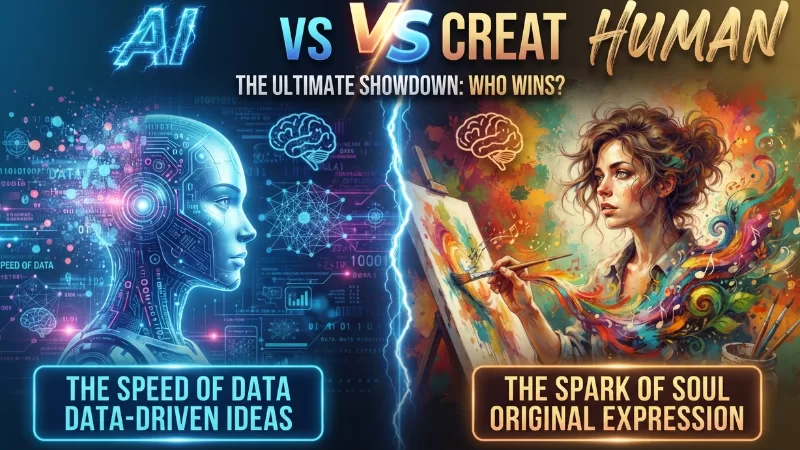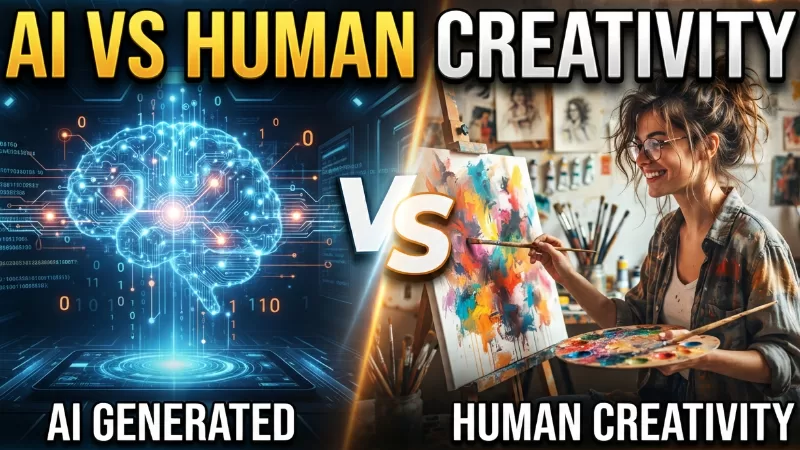
Artificial Intelligence (AI) is changing the world faster than ever before. From business operations to education, healthcare, and digital marketing, AI vs human creativity in content marketing has become an important part of our everyday lives. Tasks that once required hours of research, planning, and hard work can now be completed within a few minutes with the help of AI-powered tools.
Content marketing is one of the industries experiencing this transformation. Today, marketers can use AI to write blog posts, create social media captions, develop marketing campaigns, generate website content, and plan entire content strategies. What once took a professional content writer several hours can now be completed much faster.
There is no doubt that AI has made content creation easier, faster, and more accessible. Businesses can produce content regularly, explore new marketing ideas, and reach their target audiences without spending as much time on repetitive tasks.
However, does that mean human creativity is becoming less important? Not necessarily. Although AI can generate content in seconds, it does not automatically understand human emotions, personal experiences, cultural differences, or the deeper meaning behind every message.
This is why AI vs human creativity in content marketing has become one of the most interesting discussions in the digital marketing industry. Some marketers believe AI will eventually take over most content creation tasks, while others argue that human writers will always be necessary because of their originality, emotional intelligence, and creative thinking.
So, which side is right? Is AI better than human creativity in content marketing? And more importantly, who will shape the future of content marketing?
The answer is not as simple as choosing one over the other. Both AI and human creativity have unique strengths and weaknesses. Instead of viewing them as competitors, businesses should understand how they can work together to create better content.
Let's explore how AI and human creativity are changing the content marketing industry and why their collaboration could be the key to future success.

- 1. AI vs human creativity in content marketing Makes Content Creation Easier and Faster
- 2. AI Helps Marketers Understand Their Audience
- 3. Humans Create Emotional Connections With Audiences
- 4. Human Writers Bring Originality and Brand Personality
- 5. AI Can Support SEO and Digital Marketing Strategies
- 6. The Limitations of AI-Generated Content
- 7. The Future of Human and AI Collaboration
- 8. Why Businesses Should Not Depend Entirely on AI
- 9. How Content Marketers Can Stay Relevant in the AI Era
- AI vs human creativity in content marketing Develop strong research skills.
- Improve storytelling abilities.
- Understand audience psychology.
- Build SEO knowledge.
- Develop critical thinking.
- Learn effective AI prompting.
- Maintain a unique writing voice.
- 10. Human Creativity Will Continue to Give Brands a Competitive Advantage
- 11. The Importance of Trust, Authenticity, and Human Judgment
- 12. So, Who Will Win the Future of Content Marketing?
- Conclusion: The Future Belongs to the Combination of AI and Human Creativity
- Frequently Asked Questions (FAQs)
1. AI vs human creativity in content marketing Makes Content Creation Easier and Faster
In the world of content marketing, time is extremely valuable.AI vs human creativity in content marketing Businesses need to publish fresh and engaging content regularly to remain visible in search engines and stay connected with their audiences.
Managing content across multiple platforms can be challenging. A business may need blog articles for its website, captions for Facebook and Instagram, professional posts for LinkedIn, email newsletters, product descriptions, and promotional content for advertising campaigns.
AI vs human creativity in content marketing Creating all these materials manually requires significant time, research, planning, and effort. This is where AI becomes useful.
AI-powered writing tools can help marketers generate content ideas, create outlines, write initial drafts, improve grammar, and develop social media captions within a short period. Instead of spending hours thinking about where to start, content creators can use AI to build a foundation and focus on improving the final result.
For example, imagine a small business wants to publish three blog posts, ten social media captions, and an email newsletter every week. Completing all these tasks manually could take several days. With AI assistance, the business can generate initial ideas, organize its content calendar, and prepare first drafts much faster.
Another important advantage of AI is that it helps reduce repetitive work. Marketers do not need to start every piece of content from an empty page. They can use AI to generate suggestions and explore different approaches before selecting the best one.
However, speed does not always guarantee quality. AI-generated content can sometimes sound repetitive, generic, or disconnected from the actual needs of readers. It may also include inaccurate information or statements that require proper fact-checking.
This is where the discussion of AI vs human creativity in content marketing becomes important. AI can help businesses create content faster, but human creativity helps ensure that the content has value, originality, and a clear purpose.
A professional content writer knows how to identify unnecessary information, improve storytelling, and make an article more interesting. They can also recognize whether a piece of content genuinely answers the reader's questions.
The best approach is to use AI as a supporting tool rather than allowing it to control the entire content creation process.

2. AI Helps Marketers Understand Their Audience
Understanding an audience is one of the most important parts of successful content marketing. Before creating any content, marketers need to understand who they are targeting, what problems those people face, what information they are searching for, and what motivates them to take action.
Without this understanding, even well-written content may fail to attract the right people.
Traditionally, marketers collected audience information through surveys, interviews, website analytics, customer feedback, and market research. Although these methods are still valuable, analyzing large amounts of information manually can be time-consuming.
AI vs human creativity in content marketing makes this process easier. AI-powered marketing tools can help businesses analyze customer behavior, identify common interests, organize feedback, and discover patterns in audience engagement.
For example, an online clothing store may notice that visitors frequently search for affordable casual outfits, seasonal fashion trends, and styling tips. By analyzing search behavior and customer interactions, marketers can identify these interests and develop content around them.
They might publish blog articles such as:
- How to Choose Comfortable Everyday Outfits
- Affordable Fashion Trends You Should Know About
- Five Ways to Style Casual Clothes for Different Occasions
AI vs human creativity in content marketing can also help marketers organize customer feedback and identify frequently mentioned problems. If customers repeatedly ask similar questions, businesses can use that information to create helpful blog posts, videos, and social media content.
Another advantage is personalization. People are more likely to engage with content that feels relevant to their interests. AI can help businesses organize audiences into different groups and develop content strategies that address their specific needs.
However, there is an important difference between analyzing audience data and genuinely understanding people. AI can identify patterns, but human marketers need to interpret those patterns correctly.
Numbers alone cannot always explain why someone makes a particular decision, what emotional concerns influence their choices, or what kind of message will make them feel connected to a brand.
For example, an analytics tool might show that a particular advertisement receives many clicks but generates very few purchases. AI can help identify this pattern, but a marketer must investigate the reasons behind it.
Perhaps the advertisement creates unrealistic expectations, the product description is unclear, or customers do not trust the website. Human judgment is essential for turning data into meaningful marketing decisions.
This is another important aspect of AI vs human creativity in content marketing. AI helps marketers understand audience behavior through data, while human creativity helps them understand the people behind that data.
3. Humans Create Emotional Connections With Audiences
One of the strongest advantages of human creativity in content marketing is the ability to create emotional connections.
People do not make every decision based on logic. Their feelings, experiences, memories, and personal values often influence what they buy, which brands they trust, and what content they share.
AI vs human creativity in content marketing Successful marketing understands this.
Think about the last advertisement that genuinely caught your attention. Perhaps it reminded you of your childhood, showed a meaningful family moment, or shared a story that connected with your personal experiences.
You probably remember it because it made you feel something. That emotional response is extremely valuable in marketing.
A business can publish hundreds of promotional posts explaining product features, prices, and benefits. However, a single meaningful story may create a stronger impression than all those promotional messages combined.
Human writers understand how to use storytelling, emotions, humor, and relatable experiences to communicate with readers.
For example, imagine a company selling handmade products. Instead of simply writing:
"Our handmade products are affordable, durable, and high-quality."
A human content creator might develop a more personal message:
"Every handmade product carries a little piece of someone's hard work, patience, and creativity. We believe the things you bring into your home should have a story worth sharing."
AI vs human creativity in content marketing Both messages communicate product value, but the second one creates a more personal connection. It gives customers a reason to care about the product beyond its price.
AI can generate emotional language and suggest storytelling ideas. However, the quality of emotional communication often depends on the experiences, understanding, and creative judgment that human writers bring to the process.
Human marketers can also recognize cultural references, social expectations, and emotional sensitivities that require careful consideration.
This is particularly important for businesses targeting different audiences across countries and communities. A message that works well in one culture may not have the same effect in another.
In the debate about AI vs human creativity in content marketing, emotional connection remains one of the strongest reasons human creativity will continue to matter.
Customers want to feel understood rather than treated like numbers. They want brands to communicate honestly, answer their questions, and show that they understand their needs.
That is why emotional storytelling and genuine communication remain essential parts of successful content marketing.

4. Human Writers Bring Originality and Brand Personality
Every successful brand has its own identity. Some brands communicate in a friendly and casual way. Others prefer a professional, informative, inspirational, or humorous tone.
AI vs human creativity in content marketing This unique communication style helps customers recognize a business and understand what it represents.
Brand personality is not created through products and logos alone. It is also developed through the words a business uses, the stories it shares, and the way it communicates with its audience.
Human writers play an important role in building this identity.
A professional content writer does more than arrange words into sentences. They study the brand, understand its target audience, identify its communication style, and create messages that reflect its values.
For example, a technology company might prefer clear, professional, and informative language because its audience wants reliable information.
On the other hand, a lifestyle brand might use friendly language, humor, and personal storytelling to make its content feel more relatable.
Although AI can follow writing instructions and imitate different tones, it may produce generic expressions if the instructions and background information are limited.
This can become a problem when businesses rely entirely on automated content.
Imagine visiting five different websites in the same industry and finding that all five publish articles with nearly identical introductions, headings, and conclusions. Even if the information is useful, the experience can become boring.
AI vs human creativity in content marketing Readers want something different. They want fresh perspectives, interesting examples, practical advice, and content that feels connected to the brand.
Human creativity helps provide that difference.
Originality also comes from personal experiences and observations. A writer who has worked with customers, managed marketing campaigns, or experienced a particular problem can bring real-world insights into an article.
For example, a digital marketing professional may write about the challenges of growing a small business online based on actual experiences. They can explain what worked, what failed, and what lessons they learned.
AI can help organize and improve that information, but the original experience belongs to the human creator.
This is why AI vs human creativity in content marketing is not simply a debate about who can write faster. It is also about who can create meaningful, original, and memorable content.
A strong brand does not need to publish the most content. It needs to publish content that people recognize, trust, and remember.
5. AI Can Support SEO and Digital Marketing Strategies
Search engine optimization (SEO) is another area where artificial intelligence is making a significant difference.
AI vs human creativity in content marketing For businesses that want to attract organic traffic, creating useful and search-friendly content is essential. However, successful SEO involves much more than adding keywords to blog posts.
Marketers need to research search intent, analyze competitors, identify relevant topics, organize website content, and understand what information users expect to find.
AI can support many of these activities.
For example, AI tools can help SEO professionals:
- Generate relevant keyword ideas.
- Organize keywords according to search intent.
- Create blog post outlines.
- Suggest related topics and subheadings.
- Identify content gaps.
- Improve title and meta description ideas.
- Develop frequently asked questions.
- Organize content calendars.
- Suggest internal linking opportunities.
These features can save time and help marketers approach SEO tasks more efficiently.
Suppose a digital marketing agency wants to publish an article about local SEO services. AI can help generate related topics such as Google Business Profile optimization, local keyword research, customer reviews, location-based landing pages, and local search visibility.
The SEO specialist can then evaluate these suggestions, conduct proper keyword research, study competitors, and develop a strategy based on actual search behavior.
AI vs human creativity in content marketing However, AI-generated SEO content should never be published without careful review.
Search engines aim to provide helpful and relevant results to users. Simply producing large amounts of automated content does not guarantee better rankings.
Content needs to satisfy search intent, demonstrate knowledge, provide accurate information, and offer genuine value.
Human SEO professionals understand that ranking a website is not just about using the right keywords. It is also about creating a positive experience for visitors.
They can identify whether an article answers the main question, whether the information is easy to understand, and whether readers need additional explanations.
The relationship between AI vs human creativity in content marketing is particularly important for SEO professionals. AI can support keyword research and content optimization, but strategic decisions still require human judgment.
The future of SEO will likely involve marketers who know how to combine AI-powered tools with strong research, practical experience, and high-quality writing.
6. The Limitations of AI-Generated Content
Although AI offers many benefits, it is important to understand its limitations.
AI vs human creativity in content marketing One of the biggest challenges is accuracy. AI tools can sometimes generate information that sounds convincing but is incorrect. This can happen when a system misunderstands a question, uses incomplete information, or generates an answer without sufficient evidence.
For businesses, publishing inaccurate information can damage customer trust and harm their reputation.
Imagine a company publishing a blog post containing incorrect product specifications or misleading information about its services. Customers who rely on that information may become disappointed or lose confidence in the business.
AI vs human creativity in content marketing This is why fact-checking is essential.
Another limitation is originality. AI tools generate responses based on patterns learned from available information. They can combine ideas in useful ways, but their output does not automatically represent new research, personal experience, or original reporting.
This can make some AI-generated articles feel predictable.
A further challenge is the lack of real-world experience. For example, an AI tool can explain how to manage a successful digital marketing campaign. However, it does not personally experience the pressure of managing a client relationship, working with a limited advertising budget, or dealing with an unexpected campaign failure.
A human marketer who has faced these situations can provide practical insights that make an article more valuable.
AI vs human creativity in content marketing also requires clear instructions and proper context. If a marketer provides incomplete information, the generated content may not match the business's actual services, target audience, or communication style.
There are also privacy and ethical considerations. Businesses should be careful about sharing confidential customer information or sensitive company data with AI platforms. They should also respect copyright, verify sources, and be transparent where disclosure is necessary.
These limitations do not mean AI is unsuitable for content marketing. Instead, they demonstrate why human supervision remains important.
When discussing AI vs human creativity in content marketing, it is important to remember that AI is a powerful assistant, but it should not replace professional responsibility.
7. The Future of Human and AI Collaboration
Rather than asking whether AI or humans will win, businesses should consider a more practical question:
How can AI and human creativity work together to produce better content?
The future of content marketing will likely depend on collaboration between technology and human expertise.
AI vs human creativity in content marketing provides speed, data analysis, automation, and assistance with repetitive tasks. Humans contribute originality, emotional intelligence, critical thinking, practical experience, and strategic decision-making.
When these strengths are combined, businesses can create content more efficiently without sacrificing quality.
Consider the process of writing a blog post.
First, an AI tool can help generate topic ideas and organize an initial outline. A human writer can review the suggestions, conduct additional research, and decide which topics are most relevant to the audience.
Next, AI can help prepare a draft or suggest alternative headlines. The writer can then improve the introduction, add real examples, explain complex ideas, and make the content more engaging.
Finally, AI vs human creativity in content marketing can assist with grammar checks and formatting suggestions, while a human editor verifies the information, checks the tone, and ensures that the article accurately represents the brand.
This collaborative process saves time while maintaining human control over the final result.
The same approach can be applied to social media marketing.
AI can suggest captions, hashtags, post ideas, and content schedules. Human marketers can choose the most appropriate messages, add personality, respond to audience feedback, and create campaigns that reflect the brand's identity.
For email marketing, AI can help organize customer segments and suggest message variations. Human marketers can ensure that the communication feels relevant, respectful, and genuinely useful.
The goal is not to make humans compete against machines. The goal is to allow technology to handle tasks that can be automated while giving people more time to focus on activities that require creativity and judgment.
This is the practical direction of AI vs human creativity in content marketing: combining technology with human expertise instead of treating them as enemies.
Businesses that understand this balance may have a significant advantage in the changing digital marketing landscape.

8. Why Businesses Should Not Depend Entirely on AI
AI vs human creativity in content marketing makes content production easier, but relying entirely on automated content can create problems for businesses.
One common mistake is prioritizing quantity over quality.
Some businesses believe that publishing more articles automatically leads to more website traffic. As a result, they generate large amounts of content without checking whether it answers users' questions or provides anything useful.
Unfortunately, more content does not always mean better results.
Readers visit websites because they want solutions, information, recommendations, or answers to specific questions. If an article repeats information that is already available everywhere, visitors may have little reason to stay.
AI vs human creativity in content marketing Another issue is brand consistency.
A company needs a recognizable voice across its website, social media accounts, email campaigns, and advertisements. If every piece of content is generated independently without proper guidance, the brand's communication may become inconsistent.
Customer trust is also important.
People want accurate information, honest recommendations, and meaningful communication. Businesses should not publish AI-generated claims without verifying them.
For example, an online store should not allow AI to invent product benefits, customer testimonials, or performance guarantees. Such information could mislead customers and create serious reputational problems.
Human editors can help prevent these issues by reviewing content before publication.
Businesses should also remember that content marketing is a long-term strategy. Building an audience takes consistency, trust, and a clear understanding of customer needs.
AI can help maintain a regular publishing schedule, but it cannot independently guarantee a successful relationship between a brand and its audience.
The lesson from AI vs human creativity in content marketing is that businesses should use automation to improve productivity without sacrificing authenticity, accuracy, and customer trust.
The most effective strategy is to use AI responsibly while keeping human creativity, experience, and accountability at the center of the process.
9. How Content Marketers Can Stay Relevant in the AI Era
The growth of AI does not mean content marketers should stop developing their skills. In fact, it creates new opportunities for professionals who are willing to adapt.
AI vs human creativity in content marketing Content writers and digital marketers need to understand how AI works and how it can improve their daily activities.
Learning to use AI tools effectively is becoming an important professional skill. However, knowing how to generate content is not enough.
Marketers also need to develop abilities that make their work more valuable.
AI vs human creativity in content marketing Develop strong research skills.
Good content starts with reliable information. Writers should learn how to evaluate sources, verify facts, understand industry trends, and identify useful information.
Improve storytelling abilities.
Stories make information more memorable. Learning how to communicate ideas through relatable examples and real experiences can help writers create more engaging content.
Understand audience psychology.
AI vs human creativity in content marketing Marketers should study customer behavior, interests, concerns, and decision-making processes. This knowledge helps them create content that addresses real problems.
Build SEO knowledge.
Understanding search intent, keyword research, website structure, content optimization, and user experience can help writers produce content that supports business goals.
Develop critical thinking.
AI-generated information should never be accepted without evaluation. Marketers need to recognize weak arguments, inaccurate claims, missing context, and unnecessary information.
Learn effective AI prompting.
Providing clear instructions, background information, audience details, and brand guidelines can significantly improve AI-generated results.
Maintain a unique writing voice.
Writers should develop their own communication style instead of copying generic writing patterns. Personal observations, practical examples, and original perspectives can make their content more valuable.
Most importantly, content marketers should remain willing to learn.
Technology will continue to evolve, and marketing strategies will change with it. Professionals who combine human expertise with technological knowledge will be better prepared for future opportunities.
The discussion of AI vs human creativity in content marketing should encourage professionals to develop new skills rather than become afraid of technological changes.

10. Human Creativity Will Continue to Give Brands a Competitive Advantage
As AI tools become more accessible, creating basic content will become easier for almost everyone.
A small business owner, a freelancer, a marketing agency, or a large company can all use similar AI tools to generate blog posts and promotional messages.
AI vs human creativity in content marketing This creates an interesting challenge.
If everyone can produce content quickly, what will make one brand different from another?
The answer will increasingly depend on the quality, originality, and usefulness of the content.
Businesses will need to offer something beyond information that can easily be generated by an automated tool.
They may need to share original research, customer experiences, expert opinions, behind-the-scenes stories, practical case studies, and meaningful insights.
For example, a digital marketing agency could publish a general article explaining the importance of SEO. However, hundreds of other websites may already offer similar information.
The agency could create something more valuable by sharing a real campaign experience, explaining the challenges it faced, discussing the strategy it used, and presenting the lessons learned.
AI vs human creativity in content marketing This type of content gives readers a reason to pay attention. It also helps establish credibility and demonstrate practical expertise.
Human creativity allows brands to explore different perspectives and communicate ideas in ways that feel authentic.
AI can help organize information and improve the presentation, but original insights and professional experiences can give content a distinctive identity.
In a competitive digital environment, that difference matters.
This is one of the most important lessons of AI vs human creativity in content marketing. When technology makes content production easier, originality and genuine expertise become even more valuable.
11. The Importance of Trust, Authenticity, and Human Judgment
Trust is one of the most valuable assets a business can build.
Customers are more likely to purchase from companies they consider reliable, honest, and knowledgeable. Content marketing plays an important role in developing that trust.
Every article, social media post, email, and advertisement creates an opportunity for a brand to communicate its values.
However, trust can disappear quickly when businesses publish misleading information or make promises they cannot deliver.
AI vs human creativity in content marketing can help create professional-looking content, but businesses remain responsible for everything they publish.
Human judgment is necessary to evaluate whether a message is accurate, appropriate, and consistent with the company's values.
Authenticity is equally important.
Readers appreciate content that feels genuine. They want practical explanations, honest opinions, and information that helps them make better decisions.
This does not mean every article needs to be emotional or personal. Sometimes the most valuable content is a clear technical explanation or a straightforward answer to a common question.
AI vs human creativity in content marketing The important thing is that the content should serve a real purpose.
Human editors can recognize when an article is unnecessarily complicated, when an example feels unrealistic, or when a promotional message makes exaggerated claims.
They can also ensure that AI-generated content reflects the business's actual experience and expertise.
As AI-generated content becomes more common, authenticity and trust may become even more important factors in building strong brands.
The relationship between AI vs human creativity in content marketing is therefore closely connected to the future of brand trust. Businesses need technology, but they also need human judgment to maintain honest and meaningful communication.
12. So, Who Will Win the Future of Content Marketing?
AI vs human creativity in content marketing After considering the strengths of both sides, it becomes clear that neither AI nor human creativity should be viewed as the only winner.
AI has already transformed content marketing by making research assistance, writing support, content planning, and data analysis more efficient.
It helps businesses save time, reduce repetitive work, and explore new marketing opportunities.
Human creativity, however, provides something equally important. It brings emotional understanding, originality, personal experience, strategic thinking, and the ability to communicate with people in meaningful ways.
AI vs human creativity in content marketing These qualities are essential for building long-term relationships between brands and customers.
A business that depends only on humans may struggle with repetitive workloads and time-consuming processes. On the other hand, a business that depends entirely on AI may produce content that lacks originality, personal understanding, and a distinctive brand identity.
Both approaches have limitations.
The real opportunity lies in combining the strengths of both.
Imagine a future where AI handles keyword research, organizes content ideas, prepares initial drafts, and analyzes audience data. Human marketers then use those insights to develop creative campaigns, tell meaningful stories, build brand identities, and establish genuine customer relationships.
This approach can make content marketing more productive and more valuable.
It also creates opportunities for writers and marketers to focus on higher-level work rather than spending most of their time completing repetitive tasks.
The future will not necessarily belong to the people who use the most AI tools. It will belong to those who understand how to use technology wisely while maintaining the creativity and judgment that make their work meaningful.
Ultimately, AI vs human creativity in content marketing is not about deciding which one should replace the other. It is about understanding how their different strengths can create better marketing results.
Conclusion: The Future Belongs to the Combination of AI and Human Creativity
The debate surrounding AI vs human creativity in content marketing is likely to continue as technology develops.
AI vs human creativity in content marketing has changed how businesses create and manage content. It has made many tasks faster, reduced repetitive work, and provided marketers with new ways to analyze information and improve their strategies.
However, content marketing has always been about more than writing articles or publishing social media posts.
It is about understanding people, solving problems, communicating valuable information, building trust, and creating meaningful relationships between businesses and their audiences.
These goals require more than speed and automation.
Human creativity brings originality, emotional connection, storytelling, practical experience, and a unique brand personality. AI provides powerful tools that help marketers work more efficiently and make better use of available information.
AI vs human creativity in content marketing When these two strengths work together, businesses can achieve better results.
Instead of fearing AI or depending on it completely, content creators should learn how to use it responsibly. They should allow technology to support their work while continuing to develop their own skills, ideas, and creative abilities.
For businesses, the message is simple: use AI to improve productivity, but never forget the people you are creating content for.
For content writers and digital marketers, the opportunity is equally clear. Learn new technologies, improve your creative thinking, understand your audience, and focus on producing content that genuinely helps people.
So, AI vs human creativity in content marketing who wins the future of content marketing?
AI may win in speed, but human creativity gives content its meaning. The real winner will be the combination of both.
The future of content marketing is not about AI replacing humans. It is about humans using AI to become more creative, productive, and effective.

If you need more details and if you want to see how it works than click the URL and you may see the video – https://youtu.be/ewIGoW3diK4
Frequently Asked Questions (FAQs)
1. What is the difference between AI and human creativity in content marketing?
2. Can AI replace human creativity in content marketing?
3. Who is better at content creation: AI or humans?
4. How does AI vs human creativity in content marketing impact the future of digital marketing?
5. What are the advantages of using AI in content marketing?
6. Why is human creativity still important in content marketing?
7. Can AI-generated content rank on Google?
8. Does Google penalize AI-generated content for SEO?
9. How can marketers combine AI and human creativity to create better content?
10. What are the limitations of AI in content marketing?
11. Will AI replace content writers and digital marketers in the future?
12. How does human emotion influence content marketing compared to AI?
13. Is AI-generated content better than human-written content for SEO?
14. What role will AI play in the future of content marketing?
15. How can businesses maintain originality while using AI-generated content?
Welcome to WordPress. This is your first post. Edit or delete it, then start writing!
Written by
Didarul Islam Dipu
Comments (0)
No comments yet — be the first to share your thoughts.