Learn how AI search is changing the future of SEO, from AI Overviews to zero-click search, and simple steps to keep your content visible in AI answers.
Ask a question online today and you may get the answer before you see a single link. Type "best way to ship a container from Chattogram to Rotterdam" into Google, and an AI-written summary often fills the top of the page. Ask the same thing in ChatGPT or Perplexity, and you get a full, friendly answer with a few sources at the bottom.
For twenty years, search engine optimization (SEO) meant one thing: rank on page one of Google and wait for the clicks. That model is changing fast. Google says its AI Overviews now reach more than 2.5 billion people a month, and ChatGPT passed 1 billion weekly users in 2026. People still search. But more and more, a machine reads the web for them and hands over the answer.
This article explains what AI search is, what the data says about its impact, and what businesses and writers can do to stay visible when the "search result" is a paragraph, not a list of blue links.

What Is AI Search, and How Is It Different?
AI search uses large language models to read many web pages, pull out the useful parts, and write one combined answer. Classic search gives you a ranked list and leaves the reading to you. AI search does the reading first.
The Main AI Search Platforms
• Google AI Overviews: short AI summaries shown above the normal results. Google reports more than 2.5 billion monthly users across 200+ countries.
• Google AI Mode: a chat-style search inside Google for longer, follow-up questions. It passed 1 billion monthly users in 2026.
• ChatGPT search: OpenAI's assistant searches the web and cites sources inside a conversation.
• Perplexity, Microsoft Copilot and Gemini: answer engines that blend web results with AI-written replies.
From Ten Blue Links to One Answer
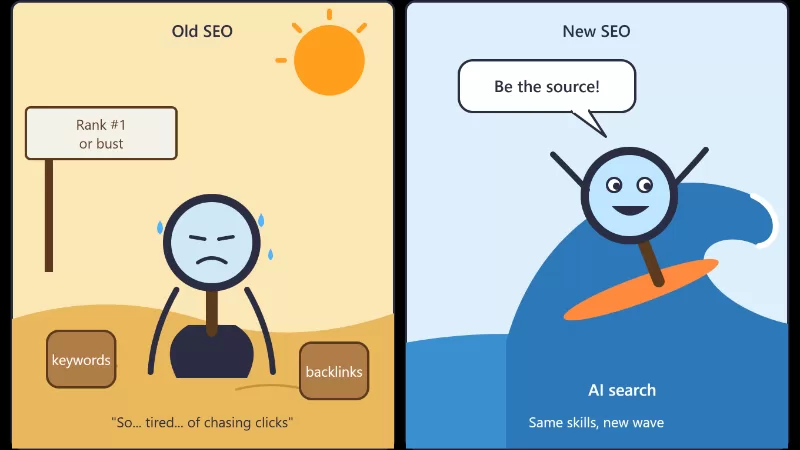
The biggest shift is in what counts as "winning." In classic SEO, you win a position, such as rank #1. In AI search, you win a mention: your brand is named, your page is cited, or your data shapes the answer.
Google also explains that its AI features use "query fan-out." One question is split into several related searches behind the scenes. A user asking how to fix a weedy lawn, for example, may trigger hidden searches about herbicides and weed prevention. So a page can be pulled into an answer for a question it never targeted by name.

The Numbers: How AI Search Is Reshaping Clicks
The data points one way: more answers, fewer clicks, but more valuable visitors.

Zero-Click Search Is Now the Norm
A "zero-click" search ends without the user visiting any website. Ahrefs compared 300,000 keywords and found that an AI Overview cuts the top result's click-through rate by about 58%. Put simply, for every 100 clicks a #1 page used to earn, it now gets around 42

Smaller Traffic, Stronger Intent
There is a hopeful side. Visitors who do arrive from AI tools have often already compared options inside the chat, so they come ready to act. At Ahrefs, AI search sent just 0.5% of visits but 12.1% of new signups. Microsoft Clarity found AI referrals to publishers grew about 156% in eight months, though they were still under 1% of total traffic.
A Prediction Worth Checking
In 2024, Gartner predicted that traditional search engine volume would fall 25% by 2026. Later studies paint a more mixed picture: demand is moving between queries and platforms rather than simply disappearing. The lesson is not that search is dead. It is that search is spreading across more places.
From SEO to GEO and AEO: What Is Really Changing?
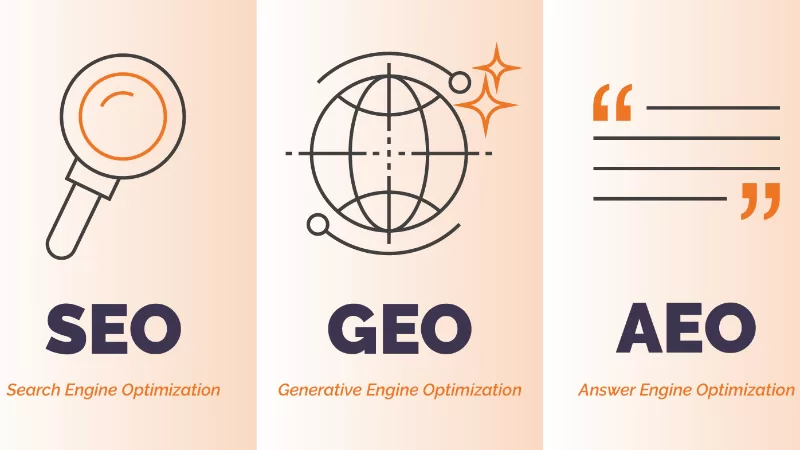
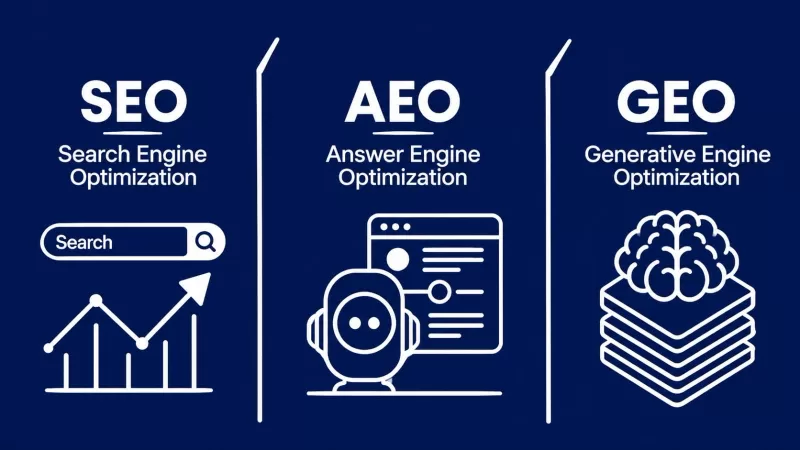
New terms have appeared to describe optimizing for AI answers. Generative Engine Optimization (GEO) and Answer Engine Optimization (AEO) both mean making your content easy for AI systems to find, trust and quote.
Where the GEO Idea Came From
The term GEO was introduced in a 2023 research paper by scientists from Princeton University and IIT Delhi, later presented at the KDD 2024 conference. They tested ways of rewriting web content and found that some methods, such as adding statistics, quotations and cited sources, could raise a page's visibility in AI answers by up to 40%. They also found the best method differed by subject area.
The Goal Moves from Ranking to Being Cited

Separating Facts from Hype
Not every "GEO hack" is real. In its 2026 guide to generative AI features, Google says it does not use llms.txt files or special AI markup. It also says there is no need to chop pages into tiny chunks or stuff in extra long-tail keywords. Its advice is simple: SEO best practices still apply, because its AI features are built on its core ranking systems.
How to Stay Visible in AI Search: Practical Strategies
You cannot control what an AI writes. You can control how useful, clear and trustworthy your content is when the AI goes looking.
1. Publish What Only You Can Say
Google's guide warns against "commodity content": general facts that anyone, or any AI model, could write. AI tools already know the basics. What they need are first-hand experience, original data and expert opinion. A real case study, a price survey or a lesson learned on the job is far more quotable than another generic list.
2. Answer Questions Clearly and Early
Put the direct answer near the top of each section, then explain. Use descriptive headings that match real questions. Short paragraphs, tables and step-by-step lists make it easy for both readers and AI systems to pick out the key point.
3. Back Up Claims with Numbers and Sources
The GEO research found that statistics, quotations and citations helped content appear more often in AI answers. Specific figures with a named source are easier to trust and easier to repeat.
4. Build a Brand That AI Recognizes
AI answers often name brands that are mentioned widely and consistently: in reviews, news coverage, industry directories and expert profiles. Keep your business details the same everywhere, and keep your Google Business Profile up to date. Earn genuine mentions; Google says fake or paid-for mentions do not help.
5. Keep the Technical Basics Strong
AI features can only use pages they can crawl and understand. Google lists the essentials: allow crawling in robots.txt, link important pages internally, offer a good page experience, and make sure any structured data matches what is visible on the page.
6. Measure More Than Clicks
Track conversions, sign-ups and enquiries, not just traffic. Check which questions in your field trigger AI answers, and test whether your brand appears in ChatGPT, Perplexity and Google AI Mode for those questions.
A Practical Example: A Small Freight Forwarder
Imagine a freight forwarding company in Bangladesh. In the past, it might have written a blog post called "What Is FOB?" to rank on Google. Today, an AI Overview answers that question in two lines, and few people click.
A smarter approach is to publish what AI cannot invent: "Average transit times from Chattogram to major European ports, based on our 2026 shipments," with a clear table, a named expert and an update date. When a buyer asks an AI assistant how long shipping from Bangladesh to Europe takes, that page has real data worth citing. Fewer people may click, but those who do are actual shippers looking for a partner.
What Stays the Same: SEO Is Evolving, Not Dying
It is tempting to say "SEO is dead." The evidence says otherwise. AI tools still depend on the open web for their answers, and Google states that its AI features are rooted in the same ranking and quality systems as normal search.
The fundamentals that worked before still matter:
• Helpful, people-first content written for a real audience
• Expertise and trust, shown through author details, sources and accuracy
• Clean site structure, fast pages and mobile-friendly design
• Content that is updated when facts change
What has changed is the reward. Good SEO used to earn a ranking. Now it earns a ranking and a chance to be the source behind an AI answer. Gartner made a similar point back in 2024: as AI floods the web with content, search systems will value quality even more.
Conclusion
Search has moved beyond Google's ten blue links. With billions of people reading AI Overviews and asking ChatGPT, the first thing many users see is an answer, not a list of websites. Clicks are falling, but the visitors who still arrive are often more serious and ready to act.
That is how AI is changing the future of SEO: it rewards those who give AI something worth quoting: original data, real experience and clear, trustworthy answers. The old goal was "rank #1." The new goal is "be the source." Businesses that start building that kind of content today will be the names AI recommends tomorrow.
FAQs
1. What is AI search?
Answer: AI search uses large language models to read many web pages and write one combined answer to a question. Examples include Google AI Overviews, Google AI Mode, ChatGPT search and Perplexity. Classic search gives you a list of links instead.
2. Is SEO dead because of AI?
Answer: No. SEO is evolving, not dying. AI tools still depend on web content for their answers, and Google says its AI features are built on the same ranking and quality systems as normal search. Good SEO now earns both rankings and citations in AI answers.
3. What is generative engine optimization (GEO)?
Answer: GEO means making your content easy for AI systems to find, trust and quote. The term comes from a 2023 Princeton University and IIT Delhi research paper. It found that adding statistics, quotations and cited sources could raise a page's visibility in AI answers by up to 40%.
4. What is a zero-click search?
Answer: A zero-click search ends without the user visiting any website, because the answer appears right on the results page. Ahrefs found that when an AI Overview appears, the top-ranking page gets about 58% fewer clicks.
5. How can I get my content cited in AI search results?
Answer: Publish original content only you can offer, such as first-hand experience, real data and expert insight. Answer questions clearly near the top of each section, and back up claims with numbers and sources. Keep your technical SEO strong so AI systems can crawl and understand your pages.
References
1. Aggarwal, P., Murahari, V., et al. (2024). GEO: Generative Engine Optimization. KDD 2024. arXiv:2311.09735.
2. Google Search Central. (2026). Optimizing your website for generative AI features on Google Search. Last updated 10 July 2026.
3. Google Search Central. AI features and your website.
4. Law, R. (2026, February 4). Update: AI Overviews Reduce Clicks by 58%. Ahrefs.
5. Stox, P. (2025, June 16). Does AI Search Traffic Convert Better Than Traditional Search? Ahrefs.
6. Peec AI. (2026). AI Overviews is the most undertracked AI search: 500,000 prompts show why.
7. Crypto Briefing. (2026). ChatGPT reaches 1 billion weekly users as OpenAI eyes IPO.
8. Schwartz, B. (2025, July 3). Similarweb: No Clicks From Google Grew From 56% to 69% Since AI Overviews. Search Engine Roundtable.
9. Microsoft Clarity. (2025). AI Traffic Converts at 3x the Rate of Other Channels.
10. Gartner. (2024, February 19). Gartner Predicts Search Engine Volume Will Drop 25% by 2026.
11. Search Engine Land & Fractl. (2026). What 1 million keywords reveal about AI's impact on search.
Written by
Mirza Abu Rashed Al Sadat
Comments (0)
No comments yet — be the first to share your thoughts.